
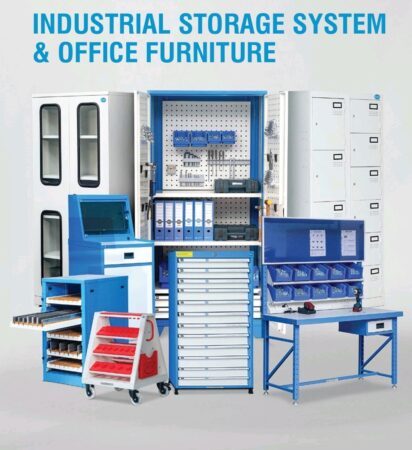
Shopfloor and Warehouse automation streamlines repetitive tasks such as picking, packing, and inventory management, drastically reducing manual labor and processing times. Automated systems minimize bottlenecks and allow for faster order fulfillment, enabling both small and large businesses to handle increased demand without sacrificing accuracy or speed248. This efficiency leads to higher throughput, meaning more orders can be processed in less time, directly boosting productivity and customer satisfaction.
*Space Optimization and Storage Capacity.*
Automated solutions, such as vertical storage systems and robotic picking, maximize the use of available warehouse space. By storing items in compact, high-density grids and reducing the need for wide aisles, automation can save up to 80% of floor space compared to traditional layouts6. This allows businesses to expand storage capacity within their existing facilities, potentially avoiding costly moves or expansions and even freeing up space for other uses65.
*Error Reduction and Improved Accuracy.*
Automation significantly reduces human errors in tasks like order picking, inventory tracking, and returns processing. Automated systems ensure accurate data capture and handling, which minimizes costly mistakes such as shipping errors or inventory discrepancies246. This leads to fewer returns, improved inventory control, and more reliable service for customers, enhancing overall business reputation.
*Scalability and Cost Efficiency.*
Warehouse automation is scalable, allowing businesses to start with small investments and expand as they grow15. Automation reduces operational costs by lowering labor expenses and optimizing resource utilization25. For small businesses, this means improved competitiveness and adaptability to changing market demands, while larger industries benefit from increased supply chain speed and resilience35. Over time, the efficiency gains and space savings typically outweigh the initial investment, making automation a smart long-term strategy for any size of industry.

Comments are closed.